I. Patterns of interaction between habitat and oceanographic variables affecting the connectivity and productivity of invertebrate fisheries
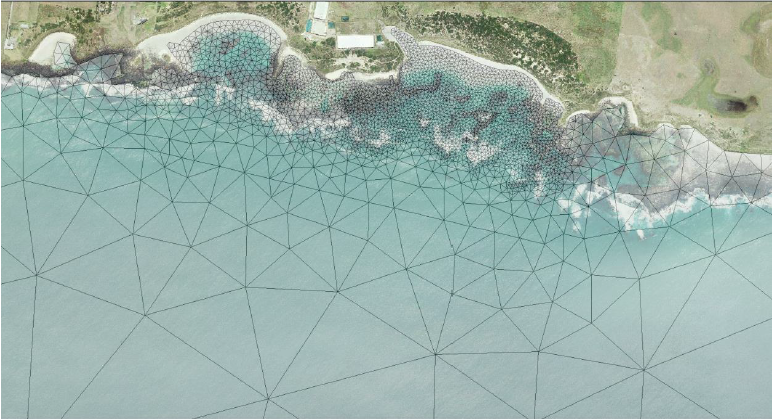
Developing finescale hydrodynamic models to capture the complexity of nearshore reef topography. Courtesy: Water Technology
Summary- This study is providing a better understanding of the importance of scale relationships between benthic habitat, oceanography, and biology and their independent and interactive impact on larval dispersal, settlement and productivity in the Victorian blacklip abalone (Haliotis rubra), and southern rock lobster (Jasus edwardsii) fisheries. We are exploring these factors using a multidisciplinary approach involving geospatial, oceanographic and biophysical modelling, and genomic technologies providing industry with a framework for guiding future management decisions.
Collaborators- Daniel Ierodiaconou, Eric Treml, Nick Murphy, Mary Young, Adam Miller, Jan Strugnell, Harry Gorfine, Craig Sherman, Bridget Green.
Funding- Fisheries Research & Development Corporation (FRDC)
II. Assessing the ecological costs and benefits of artificial wetlands in urban landscapes,
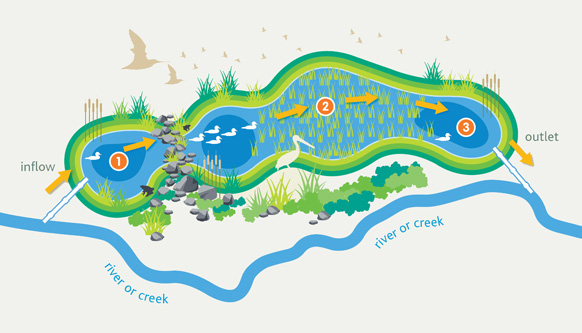
Artificial stormwater wetland. Courtesy: Melbourne Water
Summary- The nature and distribution of wetlands around cities is changing at an unprecedented rate, with artificial wetlands increasingly dominating urban landscapes. The consequences of these changes for animals, however, are largely unknown. Some artificial wetlands may be poor quality habitats that pose considerable risks to urban biodiversity, while others may play an important role in conservation. We are examining the ecological costs and benefits of artificial wetlands for native animals, and developing guidelines to help ensure wetland construction and management is cost effective and maximises biodiversity outcomes.
Collaborators- Kirsten Parris, Raoul Mulder, Vin Pettigrove, Rhys Coleman.
Funding- ARC Linkage Program
III. Linking flow, nutrients, seagrass and fish: an integrated approach to estuary management
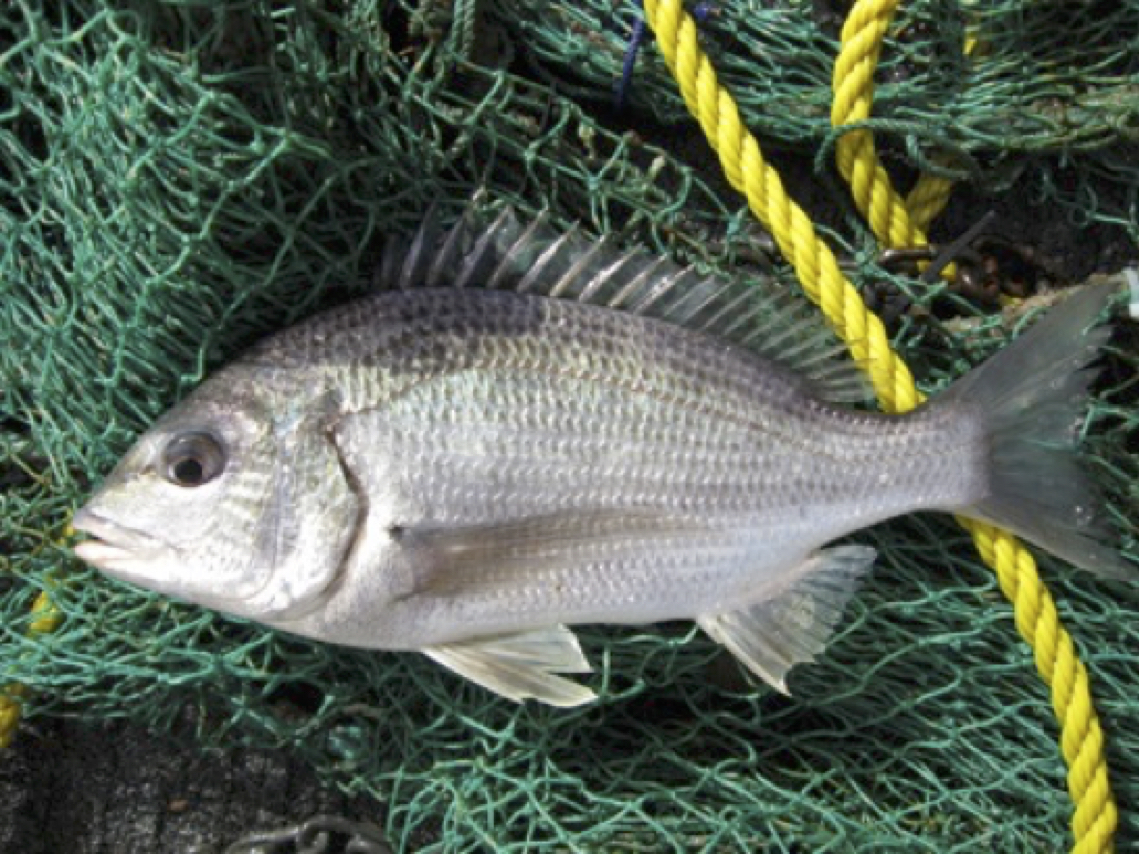
Black bream. Photo: Joel Williams
Summary- Estuaries are iconic recreational areas providing both ecological habitat and millions of dollars in revenue to the tourism and fisheries industries. How estuaries respond to human pressures is highly variable with some such as the Gippsland Lakes succumbing to algal blooms, whilst other heavily nutrient laden systems such as the Werribee Estuary support extremely high fish populations. This project is leading to an understanding of the links between freshwater flow, blue-green algal blooms, and recruitment of a key fishery species, Black Bream. The outcome of the project will give catchment managers greater confidence in setting levels of environmental flows that will both support fish populations but also mitigate against algal blooms.
Collaborators- Perran Cook, Andrew McCowan, Paul Reich, Jeffrey Walker, John Beardall, Ian Cartwright, Daniel Mainville, Bill Moulden, Heather Adams
Funding- ARC Linkage Program
IV. Restoring the lost shellfish reefs of Port Phillip Bay
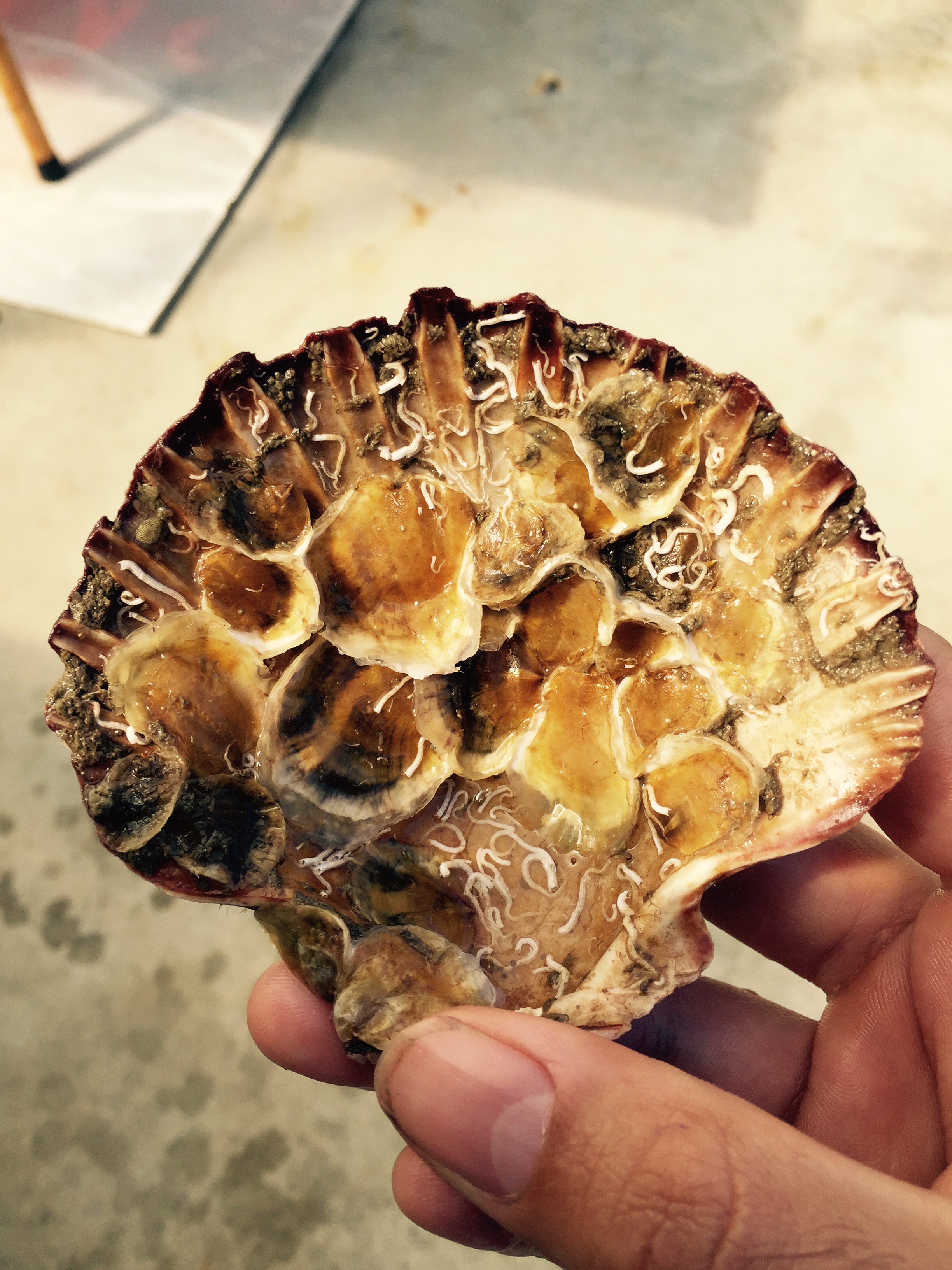
Juvenile flat oyster on scallop shell. Photo: Ben Cleveland
Native flat oyster (Ostrea angasi) and blue mussel (Mytilus edulis planulatus) beds were once ecologically important features of significant areas of Port Phillip Bay and were recognised as important fish habitat by commercial and recreational fishers. There is now opportunity with the recent development of a local commercially operated hatchery supply of native flat oyster and mussel spat (small juveniles) to consider re-establishing lost shellfish beds in Port Phillip Bay. Once established, and if managed appropriately, shellfish beds can self-replenish and increase in size, to form more expansive 3-dimensionally complex and valuable bottom habitats for both fish and a variety of other marine biodiversity.
The team, including PhD candidate Ben Cleveland and Research Fellow Dr John Ford will engage directly in the restoration process, develop restoration methodology, monitor the successes and examine the benefits and challenges.
Collaborators: Fisheries Victoria, The Nature Conservancy, Albert Park Yachting and Angling Club.
V.Born at the right time? Disentangling the effects of birthdate and developmental trajectories on fitness, population dynamics, and the evolution of life-history strategies
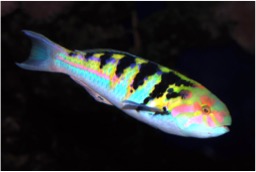
A sixbar wrasse- our model reef fish species in Moorea. Photo: wetwebmedia.com
Summary- Biology is the story of winners and losers; winners survive better, produce more offspring, and thus differentially contribute to population growth. Are winners simply born ‘lucky’ or do they ‘play their cards well’? Like any game, timing is paramount–winners may be born at the right time. Indeed, in the face of uncertainty, parents can spread out reproductive timing, but this bet-hedging will stack the deck in favour of some offspring. Are fates set by parents, or can offspring improve upon the cards they’ve been dealt? We are investigating the roles of parental investment, birth timing, and developmental progression as determinants of fitness components. We are focusing our research on the sixbar wrasse, a species of reef fish that spawns frequently to produce offspring that navigate a series of demographic bottlenecks with fitness consequences. We are integrating a longitudinal study, field experiments, and demographic reconstructions of individual life histories from otoliths (‘ear bones’) to determine whether parental or offspring “decisions” canalise the fates of individuals. We will then be developing a novel modelling framework to explore ecological and evolutionary feedbacks between parent- and offspring decision-making, to better understand the origin and maintenance of life-history strategies.
Collaborators- Jeff Shima, Erik Noonburg, Suzanne Alonzo, Craig Osenberg.
Funding- Royal Society of New Zealand Marsden Fund
VI. The blue carbon initiative: a new university-industry partnership for marine environmental research
Summary- Our aim is to develop an ongoing research and innovation revenue stream from non-traditional funding sources to address marine and coastal environmental challenges that lead to future economic opportunities. Our current projects focus on integrating ecological engineering solutions into wastewater treatment, specifically macroalgal biomass production, to reduce nutrient loads into coastal embayments; and using drift algae to recondition urchins from barrens to convert them into a commercially viable fishery resource.
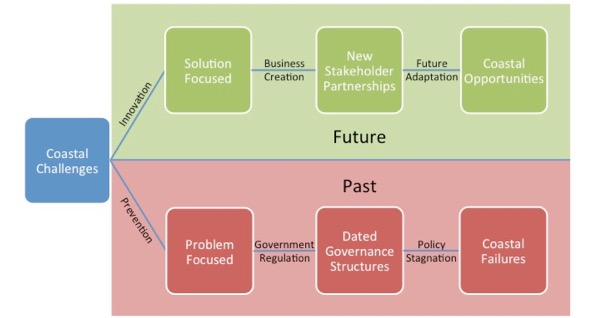
Alternative pathways for coastal environmental management
Collaborators- Tim Dempster, Symon Dworjanyn, Ute Roessner, Scott Grierson, Rocky de Nys.
Funding- William Stone Trust.
 Research on the Ecology and Evolution of Fishes